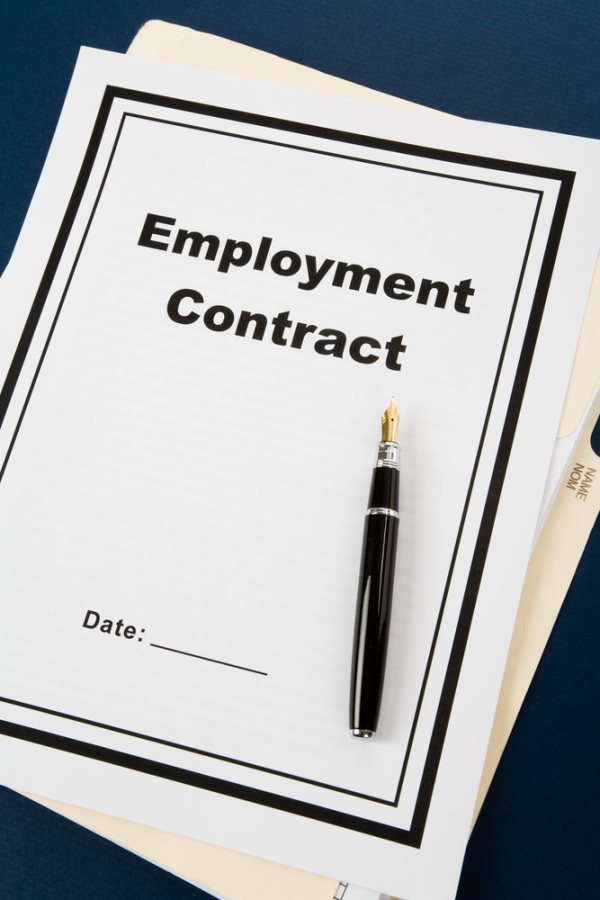
Overview of a Contract of Employment
📅 2026 Update: Recent Changes in Employment Contracts
Since the original article was published, there have been significant legal updates affecting employment contracts. These changes impact how contracts are drafted, enforced, and challenged in various scenarios. The following sections highlight key developments that may influence both employers and employees.
The details from the earlier article continue further down the page.
⚖️ Overtime Salary Thresholds
In April 2024, a proposed rule aimed to raise the salary threshold for overtime-exempt employees to $43,888 in 2025 and $58,656 in 2026. However, courts vacated this rule. As a result, the previous threshold of $35,568 remains in effect.
This means employers must still comply with the older standard when determining overtime eligibility.
- 📉 Impact on Workers: Many employees may continue to be classified as non-overtime eligible under the outdated threshold, affecting their earning potential.
🚫 FTC's Non-Compete Ban Blocked
The Federal Trade Commission proposed a nationwide ban on non-compete clauses in 2024. However, courts blocked this proposal. Non-compete agreements continue to be enforceable based on existing state laws.
- 🔍 State Variations: The enforceability of these agreements can differ significantly from one state to another, making it essential for both employers and employees to understand local regulations.
🛑 Independent Contractor Standard Paused
The Department of Labor's proposed changes to the classification of independent contractors were paused in 2024. The previous standard remains in place, impacting how workers are classified.
- 💼 Worker Rights: Misclassification can affect workers' rights and benefits. Understanding the current standards is critical for both employers and independent contractors.
📄 No Federal Fees or Forms
There are no federal fees associated with drafting or enforcing employment contracts. Additionally, the federal government does not provide standardized forms for these contracts. Employers and employees often create agreements tailored to their specific needs.
- 📋 State Requirements: Specific states may have their own requirements or forms for certain types of employment contracts, which can impact how contracts are structured.
📌 Key Points Summary
- ⚖️ Overtime salary threshold remains at $35,568.
- 🚫 Non-compete clauses are still enforceable under state laws.
- 🛑 Changes to independent contractor standards are on hold.
- 📄 No federal fees for employment contracts; no standardized forms exist.
- 📋 Local laws may require specific provisions in contracts.
💡 Tips for Employment Contracts
Reviewing the details of your own situation with an attorney can help clarify your rights and obligations.
📝 Understand At-Will Employment
Most employment in the U.S. is considered "at-will." This means that either party can end the employment relationship at any time without cause, unless specified otherwise in a written contract.
📄 Review Written Contracts Carefully
A written employment contract can override the at-will presumption. It's important to ensure that the terms for termination and other conditions are clearly defined in the contract.
⚖️ Stay Informed on State Laws
Employment laws may vary significantly by state. It's crucial to understand your state's specific requirements regarding employment contracts, including minimum wage and overtime rules.
🔍 Check for Required Provisions
Some states may mandate specific provisions in employment contracts, such as non-compete or confidentiality clauses. Be sure to comply with these state-specific requirements to ensure enforceability.
📌 Consider Alternative Dispute Resolution
Some contracts may include clauses for alternative dispute resolution methods, such as mediation or arbitration. These can provide more efficient ways to resolve conflicts than traditional litigation.
📊 Document Changes to Contracts
Any modifications to an employment contract usually require mutual agreement and should be documented in writing. This protects both parties and clarifies any changes made to the original terms.
❓ Frequently Asked Questions
❓ What is at-will employment?
At-will employment means either the employer or the employee can terminate the employment relationship at any time without cause or notice, unless a written contract states otherwise.
📅 Are there federal forms for employment contracts?
No, the federal government does not provide standardized forms for employment contracts. Employers and employees typically create tailored agreements.
🏢 Can employment contracts include non-compete clauses?
Yes, non-compete clauses can be included in employment contracts. However, their enforceability varies by state law.
🔄 How can I modify an employment contract?
Changes to an employment contract usually require mutual agreement between the employer and employee and should be documented in writing to be enforceable.
⚖️ What protections do collective bargaining agreements offer?
Collective bargaining agreements (CBAs) provide legally binding terms negotiated between the employer and a union, which can override individual employment contracts for unionized workers.
🆓 Where can I get free assistance with employment contracts?
State labor departments and nonprofit legal aid organizations often provide free resources and guidance on employment contracts and workers' rights.
⚖️ Recent Court Cases Related to Employment Contracts
Recent court rulings have clarified various aspects of employment contracts, including enforceability and the legitimacy of specific clauses. These rulings can significantly impact how contracts are interpreted and enforced.
- Florida court reverses parental rights termination orderDistrict Court of Appeal of Florida · December 10, 2021
- Florida court affirms termination of parental rights in caseDistrict Court of Appeal of Florida · February 4, 2022
- Florida court affirms termination of parental rights for K.E.District Court of Appeal of Florida · March 18, 2022
- NY Court Rules on Medical Records in Workers' Comp CaseNew York Supreme Court, Richmond County · March 5, 2026
For more information, readers are invited to browse more rulings on the news page.
End of October 2026 Update